See The Office of Compline and the Book of Compline before you read this page.
Singing Compline is a great way to learn to sight-read with solfege for two reasons:
- The music was designed to be read by singers, and assumes these singers will learn to sight read progressively: every level of sight reading is included in every daily prayer!
- You can sing compline every day. A total beginner in sight reading would then be able to sight read a simple pattern on the very first day, and can practice daily to learn more!
We remember from the first Elementary Music Literacy video that a “scale” is built from ensembles of six notes (Hexachords) symmetrical around one single half step. This limits us to ONLY 3 COMBINATIONS of 3 CONJUNCT NOTES we can possibly encounter when we sing most Church music which is diatonic, not chromatic. This Book of Compline is a perfect first foray into the diatonic scale. The three possible combinations of three conjunct notes differ in where the half-step is: (1) between the top two notes, (2) between the bottom two notes, (3) there is no half-step between the three notes. All three combinations are found in singing compline. Click on the links above to shortcut directly to examples of each.
Paradoxically, in practice, it is easier to memorize these three 3-note patterns when they are part of larger patterns of 4, 5 or 6 notes. Being able to recognize these 3-note patterns is however key to learning to sight read. This is called “Phonological awareness”. Singing Compline every day offers the possibility of practicing such 4-note, 5-note and 6-note patterns which ONLY INCLUDE ONE HALF-STEP. Click on the above link in bold to shortcut to examples of these 4, 5 and 6-note patterns.
Soon, we become familiar with the concept of the half-step, and are phonologically aware of the difference between a half-step and a full-step. We now understand how one hexachord is built (one half-step, four full steps), and we can then introduce another hexachord. We will first introduce this second hexachord with a single note, separated by a minor third from our first hexachord. Click on this link to see an example of this pattern of 4 notes (from an hexachord) + one (from another hexachord), which is sung everyday as the RESPONSORY.
3-conjunct-note pattern #1
Full step under half-step: LA-TI under TI-DO, or RE-MI under MI-FA:

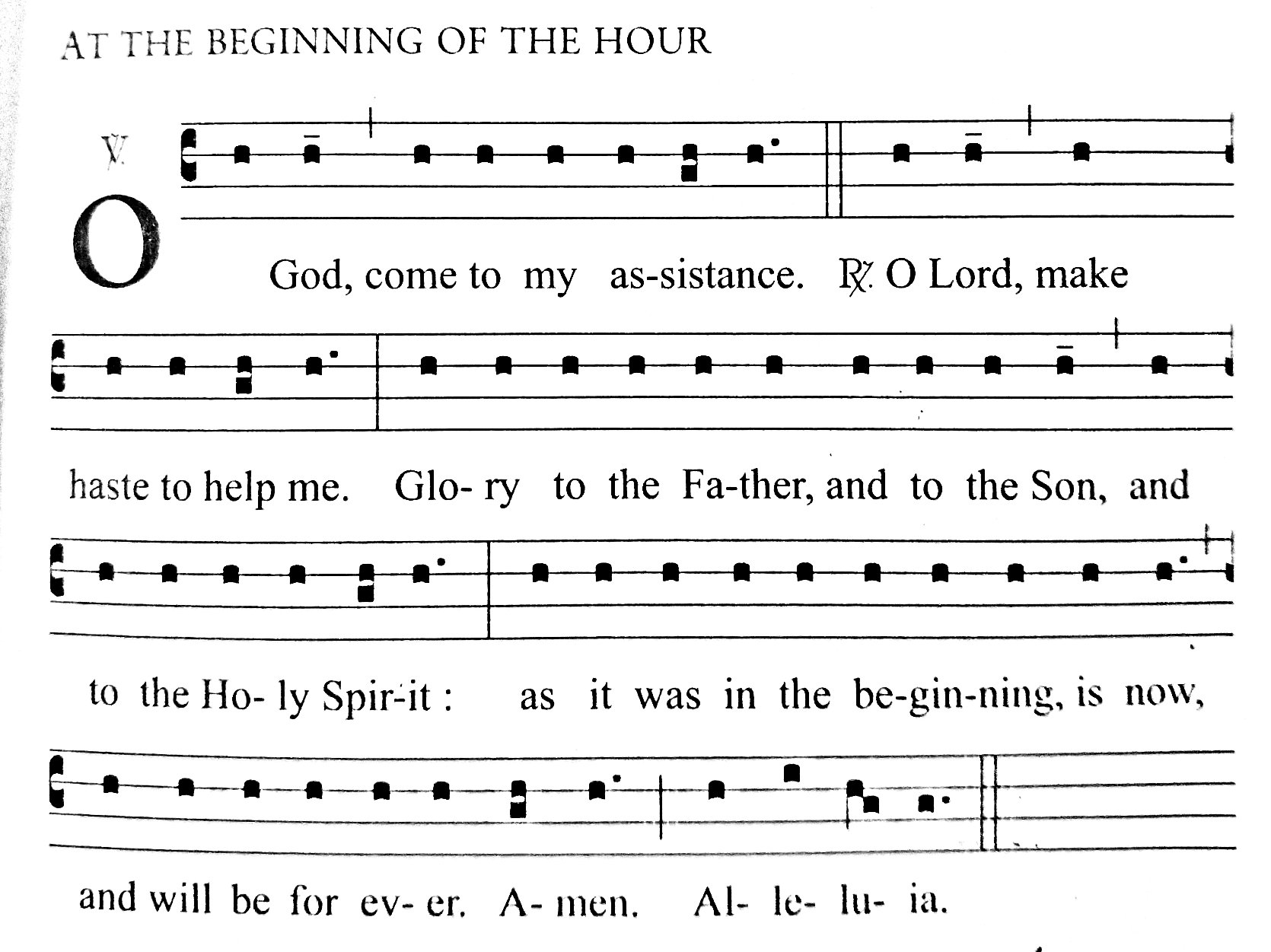
Page 17 in the Book of Compline (sung every day!):
Note: all the daily PRAYERS follow this same model. Click to view/hear the daily prayers of compline: Saturday, Sunday, Monday, Tuesday, Wednesday, Thursday, Friday. We also find the same model in the psalm tone for Fridays, but transposed to FA-MI-RE, instead of DO-TI-LA.
3-conjunct-note pattern #2
Full step over half-step: DO-RE over TI-DO, or FA-SO over MI-FA, or TE-DO over LA-TE:

Page 3 in the Book of Compline (sung every day!):
3-conjunct-note pattern #3
Two full steps and no half-step. Ex: DO-RE-MI, or FA-SO-LA. Also TE-DO-RE, or SO-LA-TI.

This pattern of three notes is found in compline very often as part of a larger pattern (4 notes and more), but isolated as 3 notes, it is only found in the psalm tone sung on Wednesdays (video below):
IMPORTANT TO REMEMBER: these 3 patterns allow us to define the four “INTERVALS” that constitute the modern differentiation between MAJOR and MINOR modes. A half-step is called a “Minor second” (abbreviated m2), a full-step is called a “Major second” (abbreviated M2), the outer interval of the 1st and 2nd patterns (DO-LA, FA-RE, RE-TI, SO-MI) are called a “Minor third” (m3), while the 3rd pattern (DO-MI, FA-LA, SO-TI) defines a “Major third” (M3).
———- 4, 5, 6-note patterns (same hexachord) ———-
4 notes : DO-RE-MI-FA (or SO-LA-TI-DO). The READINGS

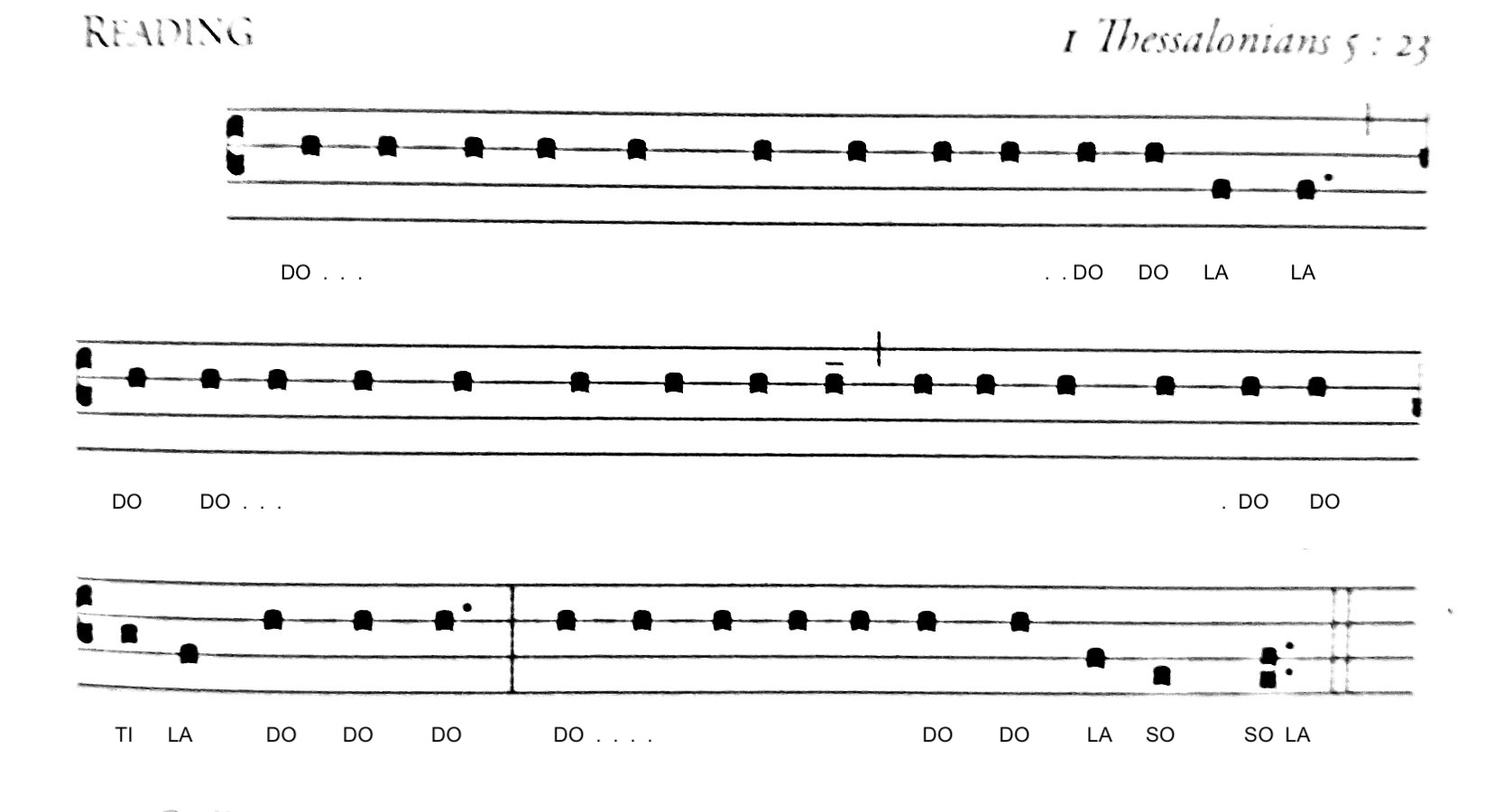
In the mass, we practice these 4 notes (DO RE MI FA) in the Preface Dialogue (click to hear and practice).
Practices the DO RE MI FA (or SO LA TI DO) with the Compline readings for : Saturday, Sunday, Monday, Tuesday, Wednesday, Thursday, Friday.
5-Note patterns : see Compline Hymns for Sundays , Hymns during Lent,
6-Note patterns: see Compline Hymns for ferial days , Hymns during Advent (1) , Hymns during Holy Week, Hymns of the Feasts of the Blessed Virgin Mary ,
———- 4-notes “plus one” patterns (two hexachords) ———-
4 notes + one : LA – DO-RE-MI-FA (or RE – FA-SO-LA-TE). RESPONSORY


6 notes (from an hexachord) “plus one” (from another heaxchord) : Hymn between Ascension and Pentecost.
 Long Beach Chant