A Modal Mentality for Modal Music
This article on cantusmodalis.org requires a little effort, like all valuable things. It begins with…
In its most general context the word modus or ‘mode’ may be defined as ‘a manner or way of acting, doing or being’. In this definition the emphasis is placed on the process of being or of moving toward a certain something which in itself, although constituting the sole reason for the process, can only be the passive result of the way the process itself unfolds.
…and concludes with this gem of a sentence:
In fact chant exists because of the enormous force of attraction of an end which is not an end but a transformation into that which will remain forever beyond us.
I recommend using a pencil when you do, but please, consider reading:
Follow-up post : Reality of rhythmic movement – Nature of vocal movement.
Read more on “modality”: Modality – introduction


Get this book!
Gregorian Chant notation is EASIER to read than “modern” notation. If you would like to learn to sing music just by reading music, SQUARE NOTES focus on the essential. This book will explain how. You can also consult 6 intervals are all you need on our website… Same idea. But the book below is more professionally made, and only $20.
A Pastoral letter worth re-reading…
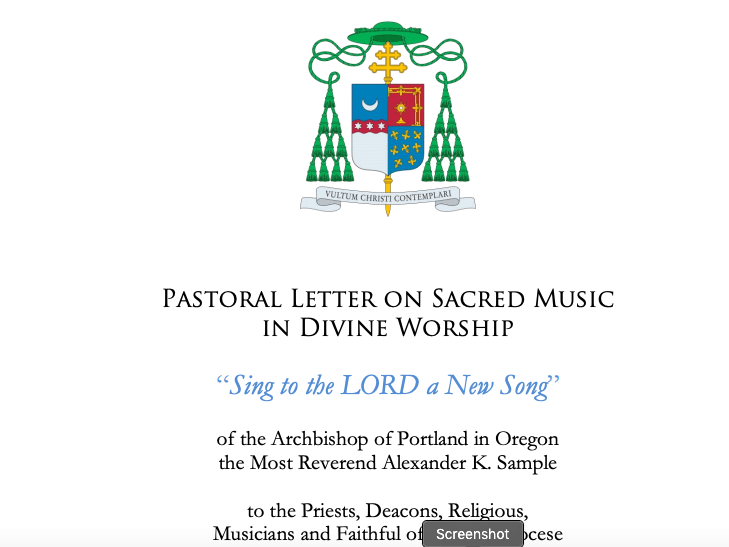
Excerpts from the “GENERAL STANDARDS” section:
c. Practice and Liturgical Discipline
As Pope Benedict XVI has stated, “Nothing can be too beautiful for God.” Musicians should take these words to heart, because it is they who bear much of the responsibility for bringing beauty to our liturgical celebrations. (…) Every hour of worship should represent at least two hours of structured preparation at a time and place apart from the congregation.
e. Preparation not Planning
It is important to keep in mind that we do not plan Holy Mass; the Church has already provided us with a plan. We prepare to celebrate the Mass. This is a subtle yet important distinction. The plan is found in the liturgical calendar and the official liturgical books: the Ordo, the Missal, the Lectionary and the Graduale.
Are you spending 2 hours in structured preparation for each hour or worship? What assistance do you need most to structure this 2:1 ration ?
 Long Beach Chant